

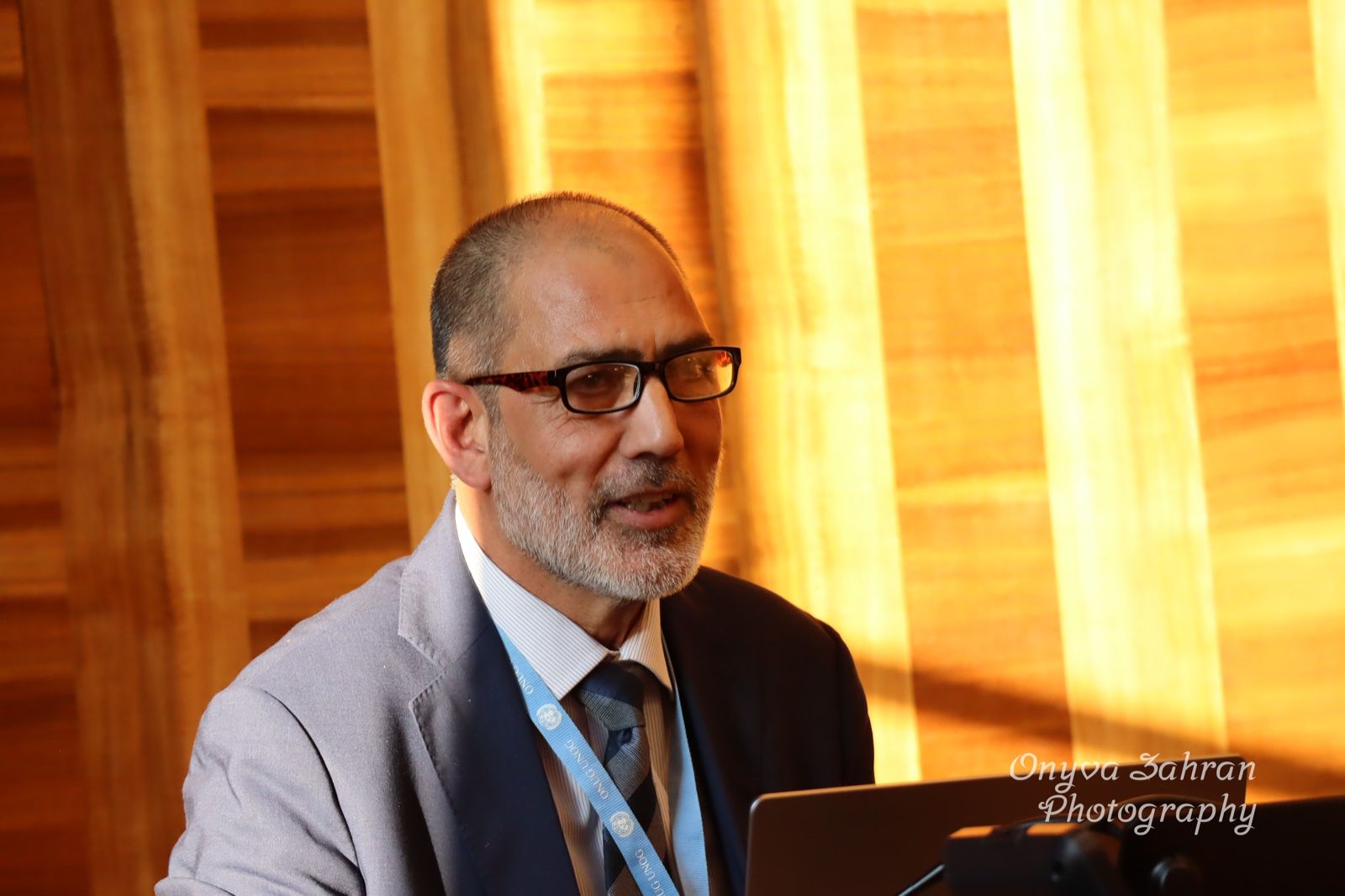
By Altaf Hussain Wani
When we think of everyday essentials, what comes to mind? Perhaps your morning coffee, the smartphone in your pocket, or the roof over your head. But there are more fundamental essentials—ones we often don’t notice until they’re missing. The air we breathe, the water we drink, and the freedom to walk down the street without fear. These aren’t just conveniences; they are our human rights, woven into the fabric of our daily lives.
For the people of Indian-occupied Kashmir, these essentials have become luxuries systematically denied. They are not passive subjects of a security apparatus but rights holders whose fundamental freedoms are violated with impunity. As the world observes International Human Rights Day under the theme “Human Rights: Our Everyday Essentials” Kashmir stands as a testament to how international obligations can be rendered meaningless through persistent non-compliance and diplomatic evasion.
International Obligations vs. Systematic Violations
India is party to core international human rights instruments, including the International Covenant on Civil and Political Rights (ICCPR) and the International Covenant on Economic, Social and Cultural Rights (ICESCR). These treaties obligate states to ensure freedom of expression, prohibit torture, protect against arbitrary detention, and guarantee the right to self-determination. Yet in Kashmir, these commitments exist only on paper.
The UN Human Rights Office has published two comprehensive reports on Kashmir (2018 and 2019), documenting widespread abuses and calling for independent investigations. India dismissed them as “fallacious” and “motivated,” refusing access to UN special rapporteurs. When the UN Special Rapporteur on freedom of expression sought to visit, silence was the response. Communications from UN Working Groups on Enforced Disappearances and Arbitrary Detention accumulate unanswered. The Human Rights Council’s Universal Periodic Review recommendations on Kashmir remain unimplemented, with India cherry-picking those it accepts while ignoring scrutiny of its Kashmir policy.
Constitutional Oppression and Institutional Abuse
The abrogation of Article 370 in August 2019 wasn’t merely a constitutional rearrangement—it was a colonial-style takeover extinguishing Kashmiri political identity. Since then, over 4.2million non-locals have been granted domicile certificates, fundamentally altering the region’s demography and violating the Fourth Geneva Convention’s prohibition against transferring civilian populations into occupied territory.
Land confiscation operates through legal sleight-of-hand. The Jammu and Kashmir Land Grants Act has been amended to allow government takeover of “illegally occupied” land—often property held by families for generations. Over 1.7 million acres face seizure notices. Simultaneously, home demolition campaigns target “ people sphere heading the freedom movement and their associates,” with over 200 homes destroyed since 2020, collective punishment masquerading as counter-terrorism.
The Architecture of Violence
Arbitrary detention has become institutionalized. Under the Public Safety Act (PSA) and Unlawful Activities Prevention Act (UAPA), hundreds languish without charge. Human rights defender Khurram Parvez has been imprisoned since November 2021 under UAPA for documenting abuses. His crime: maintaining contact with UN mechanisms India refuses to engage with.
The political leaders , Shabir Ahmed Shah, Massrat Alam Butt, Muhammad Yasin Malik, Nayeem Ahmed Khan, Ashiya Indrabi, Bilal Ahmed Saddiqi and others are imprisoned merely for demanding UN recongnised self determination.
Torture remains endemic. Local human rights group has documented over 1,500 cases of custodial torture since 2019. The bodies returned to families bear marks of electric shocks, waterboarding, and sexual violence. Custodial killings are sanitized as “encounters”—over 864 since 2019, including the killing of three laborers in Shopian staged as a militant shootout.
Rape functions as a weapon of war. The 2018 UN report noted that sexual violence by security forces continues with “impunity guaranteed by the Armed Forces Special Powers Act (AFSPA).” From Kunan Poshpora to recent cases in villages near army camps, survivors face institutionalized silencing. No soldier has been prosecuted in a civilian court, despite the ICCPR’s explicit requirements.
Enforced disappearances haunt Kashmiri families. Over 10,000 cases remain unresolved, with mass graves discovered in Uri and Baramulla, Bandipora and many other places in IoJK. The state refuses to implement the UN’s recommendation for independent forensic investigation, instead dismissing families’ demands as “separatist propaganda.”
Digital Occupation and Memory Erasure
In 2025, Kashmir’s digital space is a panopticon. The region leads the world in internet shutdowns, with over 500 shutdowns since 2019. When connectivity resumes, it’s through 2G speeds, rendering online education and telemedicine impossible. The government intercepts communications under the façade of “national security,” while the Pegasus spyware scandal revealed surveillance of journalists, activists, and even judicial members.
Social media users face midnight raids for posts mourning civilian deaths. The Jammu and Kashmir Police’s Cyber Police Station issues warnings that “anti-national” content will lead to prosecution under UAPA. Journalists are summoned for questioning for using the term “militant” instead of “terrorist.”
The Indian government banned of 32 books in 2024-25, including works by Kashmiri authors and international scholars like The Kashmir Dispute by Alastair Lamb, Victoria Schofield and others The message is clear: even memory is subversive. The raid on Kashmir Times offices in Jammu in October 2025 exemplifies press freedom’s collapse. Armed with no warrant, authorities raided the empty building claiming to have seized important documents and even arms. FIR against Editor for her anti national activities.
The Cost of International Inaction
India’s strategy is sophisticated—dismiss UN reports as “internal matters,” cite “terrorism” to justify rights violations, and weaponize economic partnerships to silence criticism. The Quad partnership and Western reliance on India as a counterweight to China have neutered diplomatic pressure. When the UN Human Rights Commissioner calls for access, India offers “guided tours” for select diplomats, not independent investigators.
Human rights organizations face reprisals. Amnesty International was forced to halt operations in India in 2020 after the government froze its accounts. Local NGOs are denied FCRA licenses, their funding choked. The UN’s special procedures send communications; India responds with boilerplate denials. The mechanism exists, but political will is absent.
Conclusion: Rights Holders, Not Subjects
The people of Kashmir are not waiting for charity. They are asserting their status as rights holders under international law, demanding what the Universal Declaration guarantees everyone: the right to life, liberty, security, and self-determination. Their everyday essentials include the right to raise children without fear of crossfire, to practice religion without surveillance, to write poetry without being branded seditious, and to demand justice without becoming the next disappeared statistic.
International human rights law is only as powerful as the will to enforce it. For Kashmir, the gap between India’s obligations and reality grows wider each day. The UN’s communications gather dust; its recommendations become footnotes. Meanwhile, homes are demolished, lands confiscated, voices silenced, and memories erased.
The theme “Human rights: every day essentials demands and recognizes that Kashmir’s future cannot be separated from its rights. Until India complies with its international obligations—until home demolitions stop, detainees are released, journalists can report freely, and UN investigators are welcomed—the international community shares complicity through its silence.
Human rights are not the icing on civilization’s cake. For Kashmiris, they are the flour, water, and yeast—fundamental, non-negotiable, and utterly absent. The world must decide whether international law means anything, or if it’s just another essential that becomes visible only when it’s gone.
The writer is chairman Kashmir Institute of international relations and can be reached @ saleeemwani@hotmail.com
And on X : @sultan1913