

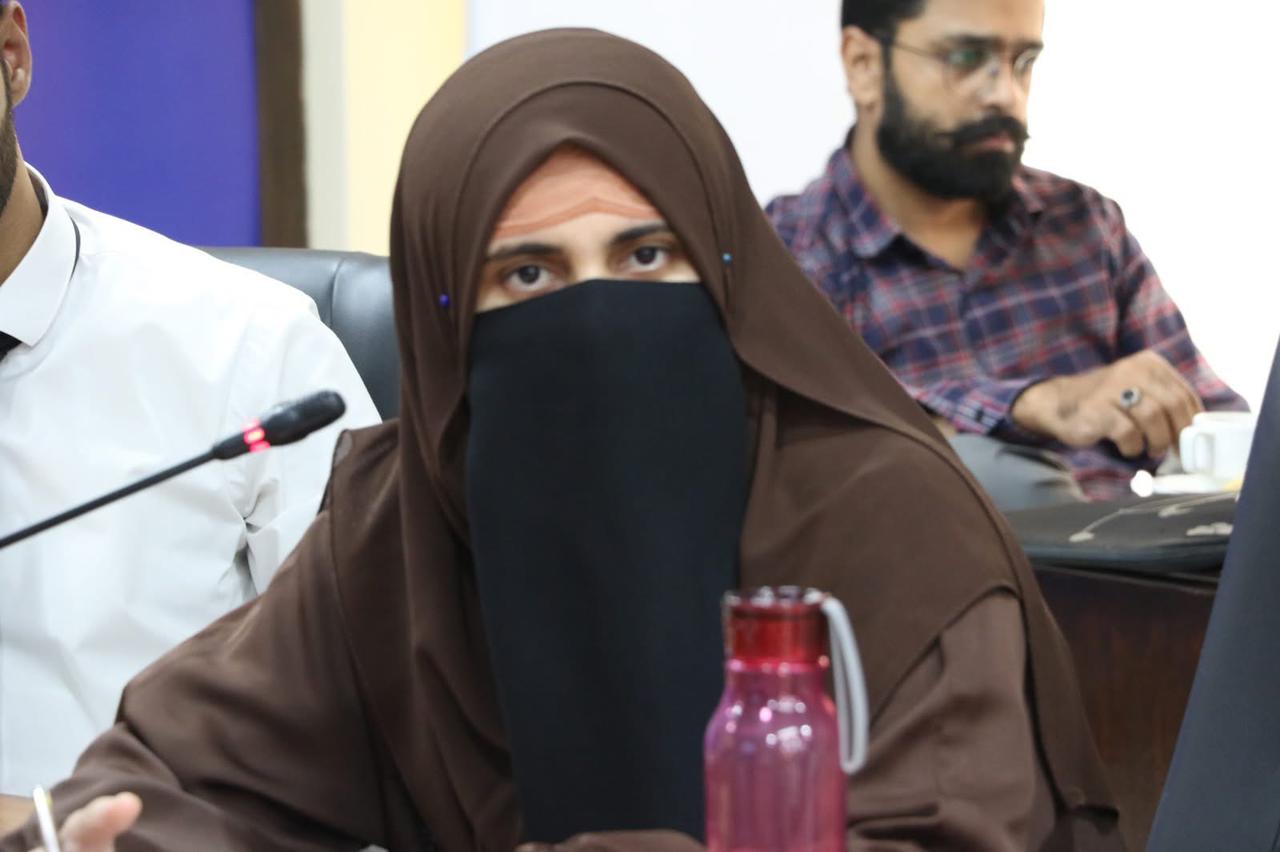
Ammara Hussain
Kashmir Solidarity Day stands as a yearly pause that forces us to look directly at the lives unfolding under occupation. It is a reminder that the suffering in Indian illegally occupied Jammu & Kashmir (IIOJK), is not distant, not historical, not silent. It continues every day, in classrooms, streets, homes and detention centers. And this is where Pakistan’s role becomes defining. Pakistan challenges India’s claims of “peace,” exposes the repression hidden behind propaganda and pushes the world to recognize the human cost of occupation. It speaks when others stay silent, and insists that the struggle of Kashmiris remains a global responsibility, not a forgotten issue.
This struggle did not begin today, nor did it emerge in isolation. Its turning point came in August 2019, when the very foundation of Kashmir’s political identity was shattered. Article 370 was not simply a constitutional clause; it was a commitment to recognizing the region’s unique identity, granting autonomy and allowing the people of Jammu and Kashmir to imagine their own future. Yet it was revoked unilaterally, without consultation, without consent, without a mandate from those it affected most. In one stroke, the semi-autonomous status vanished, and the region was split into two federally controlled union territories. Overnight, a seventy-year political arrangement collapsed.
India may insist this was done for “integration” and “development,” but the lived reality in IIOJK tells a different story. For Kashmiris, the revocation brought disempowerment, not empowerment; absorption, not integration; intensified control, not progress. And the truth surfaced within minutes: sweeping security lockdowns engulfed the valley, revealing exactly what this new order intended to enforce.
The telecommunications network of landlines, mobile telephone services, and the internet was completely severed for months, with millions cut off from information communications. Political leaders, opposition members, journalists, lawyers, and civil society activists suffered arrest under laws allowing detention without trial. Markets were closed in protest. Streets were barricaded off. Nightly raids began in earnest. The military increased its presence around the city. All this allowed a feeling of collective suffocation to occur. This did not measure a temporary emergency, but it constructed a long-term architecture for surveillance and suppression. The shutdowns alone devastated the country. Students could not access online content. Businesses shut down. Hospitals had difficulty, and families inside and outside Kashmir were severed from one another. The industry was the principal source of income for many, and with the world embracing a digital economy, tourism came to a halt in Kashmir, and the region’s economy, culture, and social life came to a standstill. Since 2019, things have obviously not improved. Legal changes have allowed outsiders to buy land and settle in the world’s most militarized Muslim-majority region, raising fears of demographic engineering in this restive border region. Land, domicile certificates, jobs, and settlement have changed the demography of the region, which Kashmiris see as a deliberate attempt to change their narrative and their politics. With the loss of land, leadership, and special laws, a region is overruled by its people rather than ruled by them.
Journalists in Kashmir have had passports impounded; newspapers shut down, been called in to meet investigators, and risked arrest daily. It is extremely dangerous for journalists to operate independently and fear attacks, imprisonment, and death. Independent reporting has become increasingly dangerous, and many journalists are self-censors to minimize the risk of reprisal. When the press is silenced, abuses flourish in the dark—and Kashmir has lived with that darkness for years. The political process, which existed with its flaws, has been eliminated. The Indian government has maintained complete silence on all political activities since 2019, which continues to this day. Security and development narratives fail to address the human expenses that result from political and civil restrictions.
The statistical data shows how families experience military raids at night while their children grow up under constant curfew restrictions and business owners fight to survive, and students face repeated school closures because of shutdowns. The prolonged detention of sons has become a learning experience for parents, while women must handle the ongoing effects of military violence and young adults face the heavy burden of uncertainty because their personal goals face opposition from institutional barriers.
Human Rights Day establishes that every person shares equal dignity which no one can take away. The situation in Kashmir demonstrates what happens when rights become dependent on political needs and nationalistic beliefs and security protocols. The humanitarian emergency affecting Kashmir affects both the local population and the administrative structure of the region. The fundamental rights to free speech and political involvement and privacy protection and economic sustainability and cultural heritage preservation exist as essential human rights. The protection of freedom of speech serves as a vital tool which enables people to experience complete human existence. The commemoration of Kashmir on Human Rights Day requires no political stance because it represents a fundamental human commitment. The world needs to understand that rights violations and identity loss, and autonomy suppression affect all people worldwide. People should never face disappearance through legal procedures or military control or being forgotten by society.
December 10 should not pass as a ceremony. It should serve as a reminder that Kashmir’s fate is not sealed but unfolding, and the world’s attention—its honest, sustained, and ethical attention—matters. Because erasure does not happen in a moment; it happens slowly, when the world looks away. The world should remember Kashmir—not as a headline, not as a talking point, but as a region where lives, voices, and futures are under threat. If the repeal of Article 370 marked the start of erasure, then December 10 must mark the start of remembrance, awareness, and demand for justice. Because once memory fades, only silence remains.
The writer is a student of BS Peace and Conflict Studies at National Defense University Islamabad and is currently serving as an intern at Kashmir Institute of International Relations (Kiir).