

By Samra Khaksar
More than 70 years have gone by since the subdivision of the Indian subcontinent but the Kashmir issue still remains to dodge diplomatic answers. Although it is constantly claimed that things are normal, developmental discourses are implemented, and military dominance is maintained, the conflict is still an active one in the territory of regional politics and the international arena. This continuity is very often mistaken as a manifestation of emotional nationalism or historic score to settle, but in reality it is actually the continuity of strategies, legal, and political realities that cannot be eliminated by the sword or rhetoric.
Fundamentally, Kashmir is not a mere issue of territory but a strategic grapple of South Asia. Geographically, the area connects South, Central, and China making it critical to the transnational trade routes, water resources and military arrangements. Control of Kashmir is the entry point to the great fluvial systems, especially the Indus basin, which is central to the Pakistani agricultural and economic security. This geostrategy is important in ensuring that Kashmir will continue to be part of the security calculus of the regional powers regardless of political exhaustions or even diplomatic stalemates.
The persistence of the conflict is also based on the international law. The resolutions of United Nations Security Council that acknowledge Kashmir as a disputed territory have not been repudiated. Although India argues that the issue is bilateral or internal, the legal situation of the territory is not clarified on the international level. International attention is sustained, despite its occasional nature, over Kashmiri claims, by this unresolved legal foundation giving them political legitimacy. Legal ambiguity conflicts are likely to exist due to the absence of consensus determination that all the parties would agree. The coercion is not successful in gaining political legitimacy, which is another reason why the issue cannot come to an end. There has been no stability in the intensive militarization of the Indian-administered Kashmir coupled with repetitive cycles of repression. Instead, it repeats a trend common to conflict studies: temporary domination in combination with resistance in the long run. Unconsented strategic domination leads to governance vacuum where people are made to comply but are not loyal. This relationship is what makes sure that overt or latent dissent keeps on regenerating.
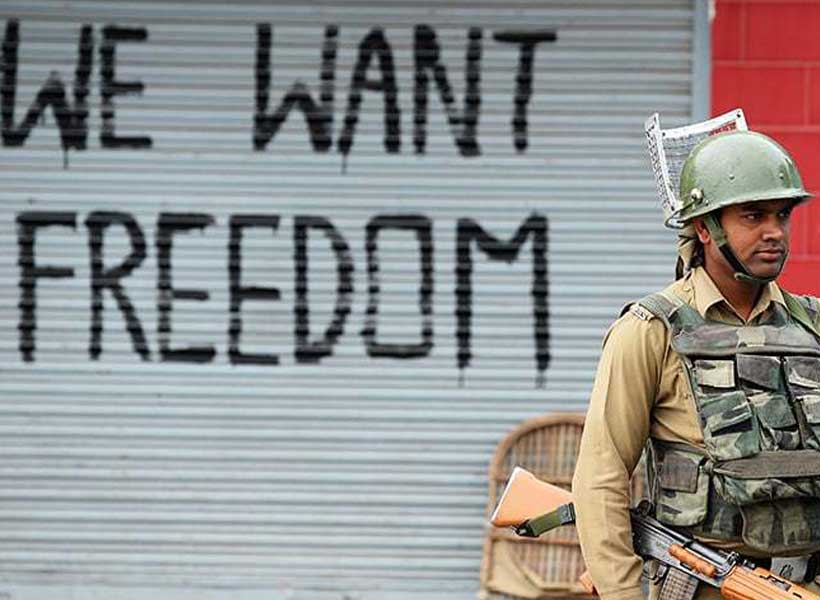
The unilateral annulment of the special constitutional status of the region on August 5, 2019, is another depiction of why Kashmir has not been resolved. Offered as a clear cut solution which would bring Kashmir under the full Integration into the Indian Union the move instead internationalised the problem, increased tension in the regions and alienation to the local people. Constitutional reforms made without political discourse are destined to address no issues, on the contrary, they institutionalise the positions and make mistrust permanent. Self-determination is also an inseparable part of Kashmir persistence. As opposed to territorial disagreements that are purely territorial, Kashmir concerns a population whose political ambitions have always been marginalised. The efforts to re-brand the conflict merely as a development issue, as a governance issue, or as a counter-terrorism issue ignore the key political issue: consent. As history indicates, disagreements on the denied political agency hardly disappear; rather, they transform. Putting out a political need does not make it go away but it simply changes its manifestation.
The South Asian strategic environment supports the longevity of the issue even more. Two nuclear-armed nations with opposing accounts of what happened makes sure that Kashmir is a flashpoint with international consequences. Any further escalation will threaten the stability of the region and would bring the major powers who are also interested in the security of their nuclear systems and the security of their regions. The Kashmir will remain strategic space as long as Kashmir is stuck to the deterrence dynamics and crisis stability. It is also crucial when narrative management fails. There has been a contradiction between the attempts to present Kashmir as a resolved matter and the frequent reports of human rights abuses, internet shutdowns, and curtalining political liberties. In a more digitally connected and globalized world, narratives are more and more challenging to control. Strategic silence can postpone but it cannot finally repress examination. With every crisis, protest or clampdown, this question is reopened, which the official narratives are trying to seal.
After all, the Kashmir problem cannot die out since it is perpetuated by structural realities and not emotion. These are geography, international law, militarization, political exclusion, and regional security dynamics and interconnected web that cannot be broken down by administrative means alone. The proclamation of normality does not make it, and non-dignified development does not replace political solution. As long as Kashmir is treated as a political conflict that needs discussions, approval, and legal explanation, it will be an unsolved strategic issue. The persistence of the problem is not the inability of time to mend wounds, but an indication that unresolved conflicts are not being diminished with time. They remain until their causative factors are solved. Kashmir lives not by emotion, but by strategy which lacks justice being unsustainable in itself.

The writer is a student of Strategic Studies at National Defence University and a research Intern at Kashmir Institute of International relations. She is also an active member of HEAL Pakistan , a youth led non governmental organization.