
The Hollow Case for “Genocide” and the Dangerous Drive for Partition: How New Delhi Is Balkanising Kashmir

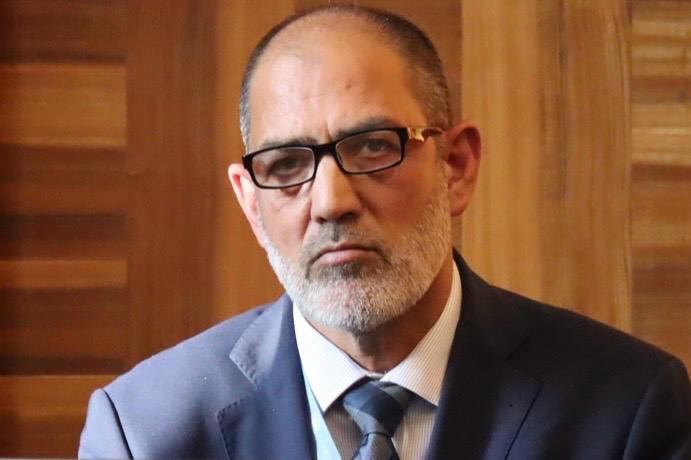
By Altaf Hussain Wani
For nearly four decades the tragedy of 1990 has been repeatedly reframed as a singular, sanitized story: the “genocide” of Kashmiri Pandits and their forever-exile. That narrative—now amplified by some Pandit organisations and useful to political actors in New Delhi—has obfuscated a far more complicated reality. What unfolded in the Valley was political collapse, communal and political violence, and the securitisation of an unresolved international dispute. To treat the 1990 exodus as a standalone moral cudgel is to ignore how state action and strategic administration have since reshaped Kashmir’s political geography.
Dr Ajay Charangoo’s demand for a “Hindu Kashmir” union territory is not an isolated rhetorical flourish; it sits inside a pattern of policy choices that together indicate a deliberate project of territorial and demographic redesign. Since August 2019, New Delhi has used abrogation of Article 370, bifurcation into Union Territories, new domicile rules, and delimitation to change who votes, who works, and who owns land in occupied Jammu & Kashmir. These administrative levers are not neutral reforms: they are instruments that make communal engineering practicable.
Viewed together, the moves point toward the effective balkanisation of a mixed polity into communal fiefdoms. One can already map five emerging territorial outcomes from this policy trajectory: (1) a carved-out Jammu state fashioned to consolidate a Hindu—Dogra—majority; (2) the Valley retained as a centrally controlled Union Territory with weakened local sovereignty; (3) the formal creation or tacit encouragement of Panun Kashmir-style Hindu enclaves inside the Valley as “safe” settlement zones; (4) the separate Union Territory of Ladakh (2019), removed from the political life of the Valley; and (5) strategically sited settler townships and security zones enabled by altered domicile and land rules to create new demographic facts on the ground. Together these five outcomes amount to a partition by administrative means—slow, legalistic, and deniable.
This is not only impractical; it is dangerous. Converting legitimate grievances—displacement, loss, demand for restitution—into exclusive territorial claims invites a permanent fracture of communal coexistence. The moral urgency of redress for displaced Pandits cannot be made the pretext for remaking the occupied Valley into a patchwork of mono‑confessional units protected by coercion. Nor can the trauma of one community be used to erase or sideline the decades-long suffering of the Muslim majority: tens of thousands killed, thousands disappeared, innumerable human-rights violations documented, and a society compressed under a heavy militarised presence.
Moreover, the disputed nature of Kashmir matters. The princely accession of 1947, the ensuing hostilities, and the UN Commission for India and Pakistan (UNCIP) and United Nations Security Council (UNSC) resolutions framed Kashmir as an international dispute and envisaged a plebiscite to determine its future. Those resolutions remain part of the legal and political context that India repeatedly refuses to acknowledge in practice. International law and the unfinished UN processes cannot be wished away by unilateral administrative redesign. If New Delhi persists in converting international dispute into domestic administrative fiat, it will only deepen grievance and delegitimise any claim to democratic normalisation.
What is required is a different politics: one that refuses both communal partition and securitised paternalism. First, any discussion about state reorganisation must begin with transparent, independent audits—of land transfers, domicile lists, recruitment patterns and development spending—subject to public scrutiny and judicial review. Second, domicile and land laws should be recalibrated to protect long‑term residents of all communities and to prevent speculative or politically motivated settlement. Third, restoration of meaningful statehood must come with enforceable guarantees: demilitarisation timelines, independent human‑rights oversight, guarantees against demographic engineering, robust minority protections and the right to return to Kashmir Muslims who were forced to migrate to Pakistan, due to brutal expression of Indian state in different eras.
Crucially, the process must be internationally witnessed and UNSC‑backed. A credible, durable settlement cannot be negotiated behind closed doors while nearly a million troops and an altered institutional architecture determine outcomes. A UNSC-supported framework would prioritise phased demilitarisation, an impartial truth-and-reconciliation mechanism to investigate all atrocities, interim autonomy with inclusive power-sharing, and a final-status mechanism that respects the right of self-determination envisaged in UNCIP and UNSC resolutions. This is not a call for external imposition; it is a plea for international guarantees that can make local reconciliation possible.
Healing, not partition, must be the guiding principle. Pandits should be able to return to their ancestral homes as equal citizens, not as occupants of fortified enclaves. Muslims, Sikhs, Dogras and others must see their rights protected and their political agency restored. The international character of the dispute is inconvenient for those who prefer administrative fixes; yet it remains the only realistic bulwark against the slow institutionalisation of segregation.
New Delhi must either choose democratic inclusion or continue down the road of partition by policy. The former requires courage: to admit past mistakes, to invite impartial scrutiny, to dismantle the structures that encourage communal engineering. The latter promises only instability, international reproach, and a fractured polity where peace is always provisional.
Kashmir’s future should not be written in the language of fear, grievance-shopping and demographic tactics. It deserves a democratic, UNSC-backed process that honours legal obligations, protects plural citizenship, and returns agency to its people. Anything less risks turning a region of shared histories into a map of permanent divisions.
Altaf Hussain Wani is Chairman, Kashmir Institute of International Relations. He can be reached at chairman@kiir.org and saleeemwani@hotmail.com. X: @sultan1913