

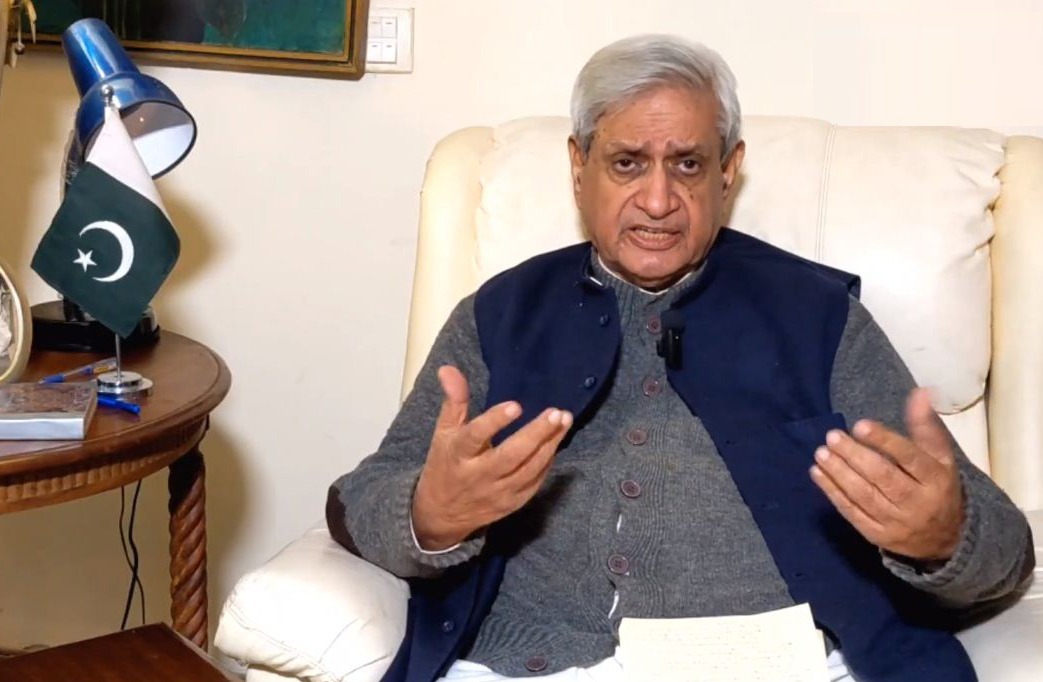
Islamabad: On Kashmir Solidarity Day, former Chairman of the Parliamentary Kashmir Committee, Syed Fakhar Imam, said that the alleged Instrument of Accession of Jammu and Kashmir to India is missing and has never been officially produced, raising serious legal questions about India’s claim over the region.
Talking to journalists, he said that no authentic or verified record of the document exists anywhere in the world. He added that researchers who examined archives at the India Office Library in London and India’s Foreign Office failed to find the original Instrument of Accession allegedly signed by Maharaja Hari Singh.
Syed Fakhar Imam termed this a fundamental legal flaw, saying that Pakistan should have challenged India’s claim from the outset by demanding proof. He said that while 562 princely states were given the choice to accede to Pakistan or India, in the case of Kashmir an illegal act was later portrayed as legal due to the absence of the accession document.
He said that on this disputed basis, India took the Kashmir issue to the United Nations, where resolutions calling for a plebiscite were passed but have yet to be implemented.
The former chairman also referred to India’s actions in Junagadh and Hyderabad Deccan, saying both were forcibly occupied despite the rulers’ decisions in favor of Pakistan or neutrality, and that the international community failed to adequately condemn those actions.
Criticizing the Radcliffe Award, he said Muslim-majority areas such as Gurdaspur and Ferozepur were wrongly awarded to India, providing it land access to Kashmir. He added that had Gurdaspur gone to Pakistan, Kashmir would naturally have become part of Pakistan.
Referring to the Indus Waters Treaty, Syed Fakhar Imam said Pakistan conceded three rivers, the Sutlej, Beas, and Ravi, to India in 1960, an unprecedented step in international history. He alleged that India is now violating the treaty, noting that Prime Minister Narendra Modi has publicly shown disregard for it.
He urged the United Nations Security Council to take serious notice of India’s actions, pass resolutions against what he termed violations of international law and human rights, and expressed confidence that the Kashmiri people would eventually achieve their legitimate rights.