

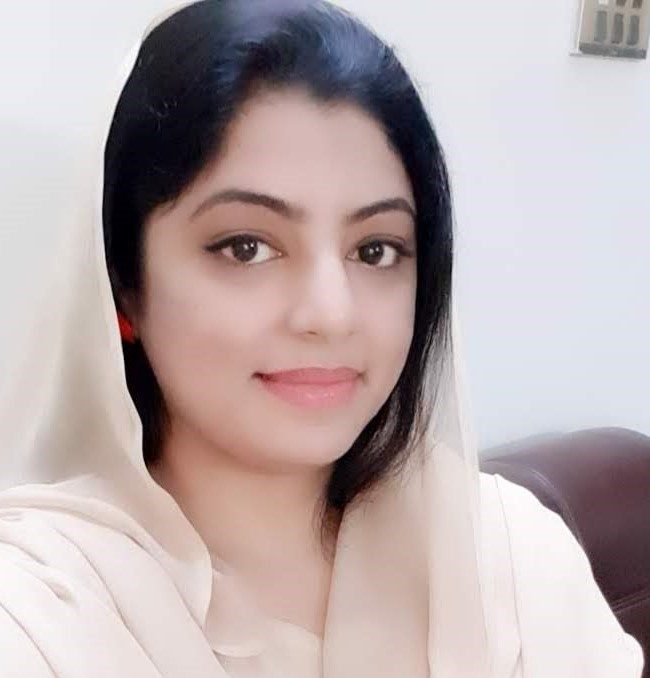
By Mehr un Nisa
Diplomatic language is always chosen with care, shaped with intent and used with purpose. It carries weight and sets the tone of a state’s conduct. In many ways, it acts as the outer shell of a state’s composure, calm, controlled and purposeful. But what happens when that shell begins to crack? It reveals something far less reassuring: uncertainty beneath the surface.
This is where Indian Minister of External Affairs S. Jaishankar’s remark enters the frame. When he declared that “India is not a broker state like Pakistan,” he did not elevate India’s stature, he successfully diminished it. The statement was not just inelegant; it was strategically injudicious. Because diplomacy has its own grammar and in that grammar, restraint is not weakness. It is DISCIPLINE.
India today is not facing a sudden diplomatic setback, it is confronting the consequences of a long-cultivated illusion. India’s foreign policy narrative has increasingly revolved around its own exceptionalism. For years, it has projected itself as the indispensable power, the voice of the Global South and the only state capable of balancing East and West. But the Iran crisis has exposed an undeniable embarrassment and diplomatic humiliation for India.
While India speaks of democratic credentials, global influence and economic rise, it simultaneously overlooks internal contradictions i.e., press freedom concerns, communal tensions and increasing centralization of power. International indices have reflected this unease. Reports from organizations such as Freedom House have downgraded India’s democratic standing in recent years, placing it in the category of “partly free.” This not only eliminates India’s strengths but also complicates its claims.
Despite this, the tone of overconfidence has remained intact. It has assumed that its size, economy and strategic location automatically translate into diplomatic centrality. The recent crisis has challenged that assumption.
When Iran-related tensions escalated, India was not at the table neither consulted nor considered a serious mediator. Instead, Qatar, Oman and notably Pakistan were engaged. For a country that has offered to mediate in conflicts like Russia–Ukraine, this exclusion is revealing. Mediation depends on trust, neutrality and access, areas where India’s recent positioning has weakened its standing. Its alignment with Western blocs raises questions about neutrality, reluctance to challenge the United States affects credibility and inconsistent messaging limits access. Data from 2024–2025 shows over 60% of mediation efforts in West Asia involved Qatar, Oman, or Pakistan, making India’s absence striking.
When states feel excluded, they often respond with irritation. When that irritation surfaces in official language, it becomes exposure. Diplomacy does not operate through denial. If India truly did not see mediation as relevant, it would not need to distance itself from it so aggressively. The very need to reject the label reveals sensitivity.
More importantly, the statement creates a contradiction. India has previously expressed willingness to mediate in global conflicts. Prime Minister Modi has stated that India is ready to contribute to peace efforts in Ukraine. Senior officials have emphasized India’s role as a stabilizing force. If mediation is acceptable in one context, why is it dismissed in another?
This inconsistency does not go unnoticed. It raises questions about whether India’s positions are guided by principle or convenience. And once such questions arise, credibility begins to erode. The embarrassment here is not loud, it is subtle. It lies in the gap between what India says about itself and how others respond to it.
While India is busy clarifying its non-broker status, Pakistan has pursued a markedly different approach, one defined by precision rather than projection. Pakistan has not declared itself the leader of any bloc. It has not framed itself as indispensable. Instead, it has quietly positioned itself as useful. This distinction matters.
Pakistan’s diplomatic engagement has focused on maintaining working relations across competing powers. It has engaged the United States, strengthened ties with China, sustained connections with Gulf states and kept channels open with Iran. This multi-vector approach has allowed it to operate as a bridge when communication becomes difficult.
At the same time, Pakistan’s military establishment has ensured that diplomacy is backed by credible deterrence. The Pakistan Army remains a central pillar of the country’s strategic posture. Its preparedness and regional awareness assure that diplomatic commitments are supported by capability. This combination creates reliability.
Pakistan has also preserved a degree of strategic autonomy. It has avoided becoming fully dependent on any single power structure. This flexibility increases its acceptability as a mediator or facilitator. Pakistan has been involved in indirect communication channels during sensitive negotiations. These roles are rarely publicized, but they are acknowledged where it matters within decision-making circles. Pakistan does not need to announce its relevance. It is recognized.
The contrast between India and Pakistan at this moment is not about size or economic scale. It is about the approach. India has relied on projection, asserting its importance, emphasizing its identity and expecting recognition. Pakistan has relied on positioning, building relationships, maintaining balance and offering utility.
In the end, Jaishankar’s remark will be remembered not for its wording, but for its context. It arrived at a moment when India was expected to act, but chose instead to explain. And in doing so, it created a peculiar situation.
The author is the head of the research and human rights department of Kashmir Institute of International Relations (KIIR). She can be reached at : mehr_dua@yahoo.com and on X @MHHRsay