


By Alina Ijaz
What does Human Rights Day truly mean to people who have lived for generations under a reality where rights are promised on paper but suspended in practice? This question resonates most painfully in Indian illegally occupied Jammu & Kashmir, where lofty global principles often collide with the lived reality of a place shaped more by security checkpoints and political calculations than by the Universal Declaration of Human Rights. As the world marks 10 December with statements of commitment and international ceremonies, Kashmiris are left confronting a reminder of how far these promises have drifted from their daily lives.
For decades, discussions on IIoJK have been reduced to a territorial dispute between nuclear armed neighbors, allowing the human story of the region to slip quietly behind diplomatic posturing. Yet in this highly militarized space, human rights have not merely been infringed; they have been systematically redefined, diluted, and in some cases, altogether suspended. The turning point arrived in August 2019, when India revoked Articles 370 and 35-A and rewrote the constitutional relationship between the Union and the people of Jammu and Kashmir. This wasn’t just a bureaucratic change. It seeped into questions of identity, ownership of land, and the fragile sense of autonomy that Kashmiris held onto.
The dismantling of IioJK’s limited autonomy opened the way for sweeping central control. Overnight, a state with its own constitution and flag became a centrally administered territory governed directly from New Delhi. The amendment to domicile laws, followed by fast-tracked residency certificates for outsiders, triggered widespread fears of demographic alteration. Simultaneously, dozens of local political leaders were detained, the internet remained shut for months, and the space for journalism and dissent narrowed to the point of suffocation, actions that directly contradict India’s obligations under the International Covenant on Civil and Political Rights, particularly Article 9, 12, 19, 21 and 25. These are not abstract legal shifts; they have reshaped the lived experience of an entire population.
India defends these measures as essential for stability and growth. In fact, Prime Minister Narendra Modi said the decision would benefit both the region and the rest of India, asserting that constitutional constraints under the old status had “held up progress and infrastructure projects,” which would now move forward. But development cannot be achieved by shrinking civic space, nor can stability be secured by diminishing rights.
Beyond the political and legal fallout, the everyday fabric of life in IIoJK has been quietly fraying. Markets that once bustled through tourist seasons now open cautiously, unsure when the next shutdown or security sweep will force shutters down again. Students have lost months, in some cases years, of schooling to communication bans and prolonged closures, while artisans and small traders struggle to find stable work in an environment where uncertainty is constant. These quieter disruptions rarely make headlines, yet they expose how deeply human rights violations seep into the everyday rhythms of a society.
The crisis also has a geopolitical dimension, where the interests of spoilers, hegemons, and global stakeholders overshadow the lived realities of Kashmiris. For China, the region connects to wider strategic interests linked to CPEC and for the United States, it is part of the broader chessboard of South Asian influence. With so many powerful interests converging, the 22 million Kashmiris who live there often feel like supporting characters in a story written about them but rarely with them.
The scale and persistence of human-rights violations in the region become clearer when seen through emblematic cases. The 2010 Machil incident, in which three young labourers were killed and falsely labelled as militants, remains a disturbing reminder of how easily the line between combatant and civilian can be manipulated and how fragile accountability is even when it does occur. Similarly, the disappearance and killing of human rights lawyer Jalil Andrabi in the 1990s continues to symbolize the vulnerability of those who attempt to document abuses; his case lingers unresolved despite clear evidence and an identified accused. More recently, the widespread use of pellet guns during protests has created what doctors in Srinagar described as a generation of partially or completely blinded youth, an outcome difficult to reconcile with any acceptable standard of proportional force. These are not isolated incidents; they point to ongoing patterns of force, detentions, and legal shields like AFSPA that protect security personnel, leaving accountability not just rare but structurally discouraged.
Human Rights Day is meant to reaffirm that dignity and freedom belong to every human being. Yet in IIoJK, rights remain conditional, suspended, or deferred. The crisis is not historic; it is ongoing, lived daily in detentions, shuttered newsrooms, blinded youth, and families still searching for disappeared sons. To acknowledge these realities is not to take sides in a territorial dispute; it is to recognize a universal truth: human rights cannot be bartered away in the name of security or sacrificed at the altar of geopolitics. And until the world admits this, Human Rights Day will remain, for Kashmiris, a reminder not of progress but of promises still unkept.
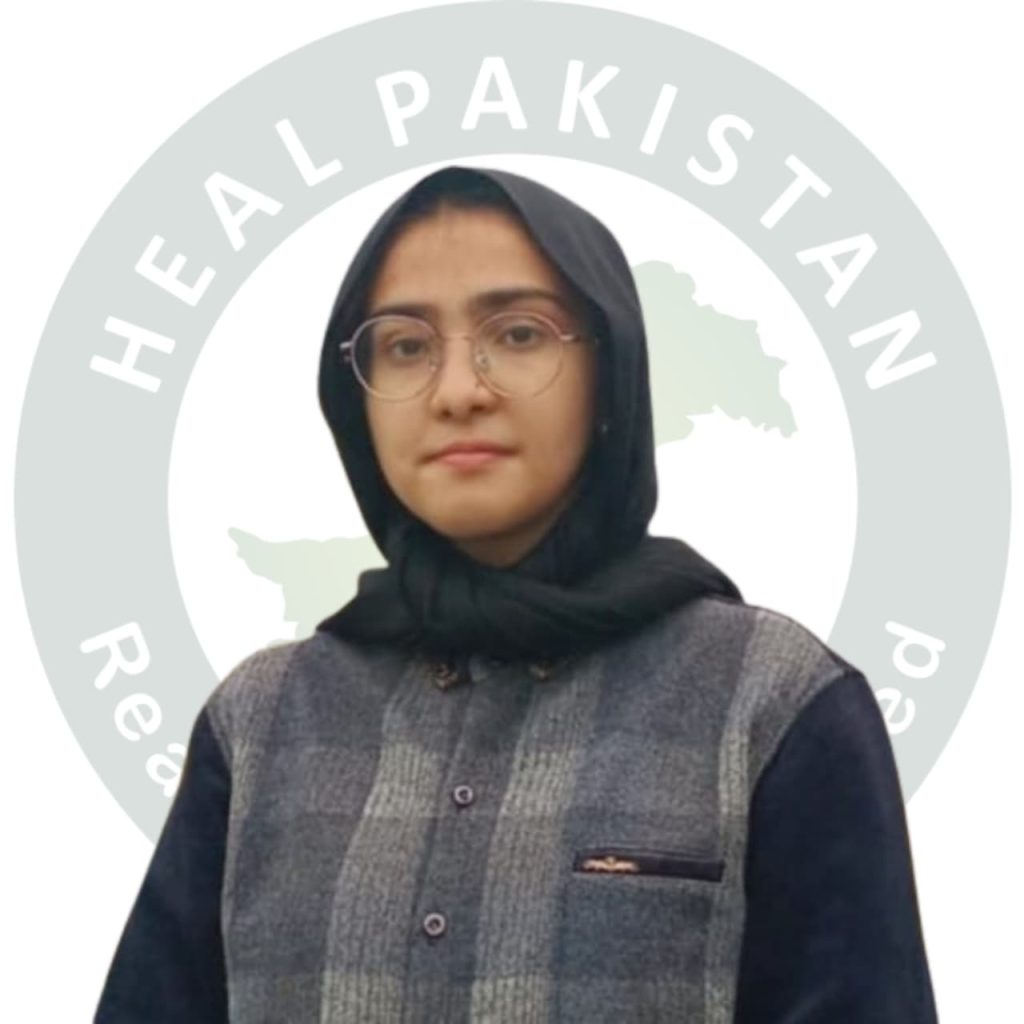
The writer is an active member of HEAL Pakistan Organization, an initiative dedicated to promote Humanity, Education Empowerment, Awareness, and Leadership, in collaboration with Kashmir Institute of International Relations (KIIR). She can be reached at alinaijaz2006@gmail.com