
Dhurandhar and the Shadow of Performative Patriotism: When Cinema Becomes a Geopolitical Tool

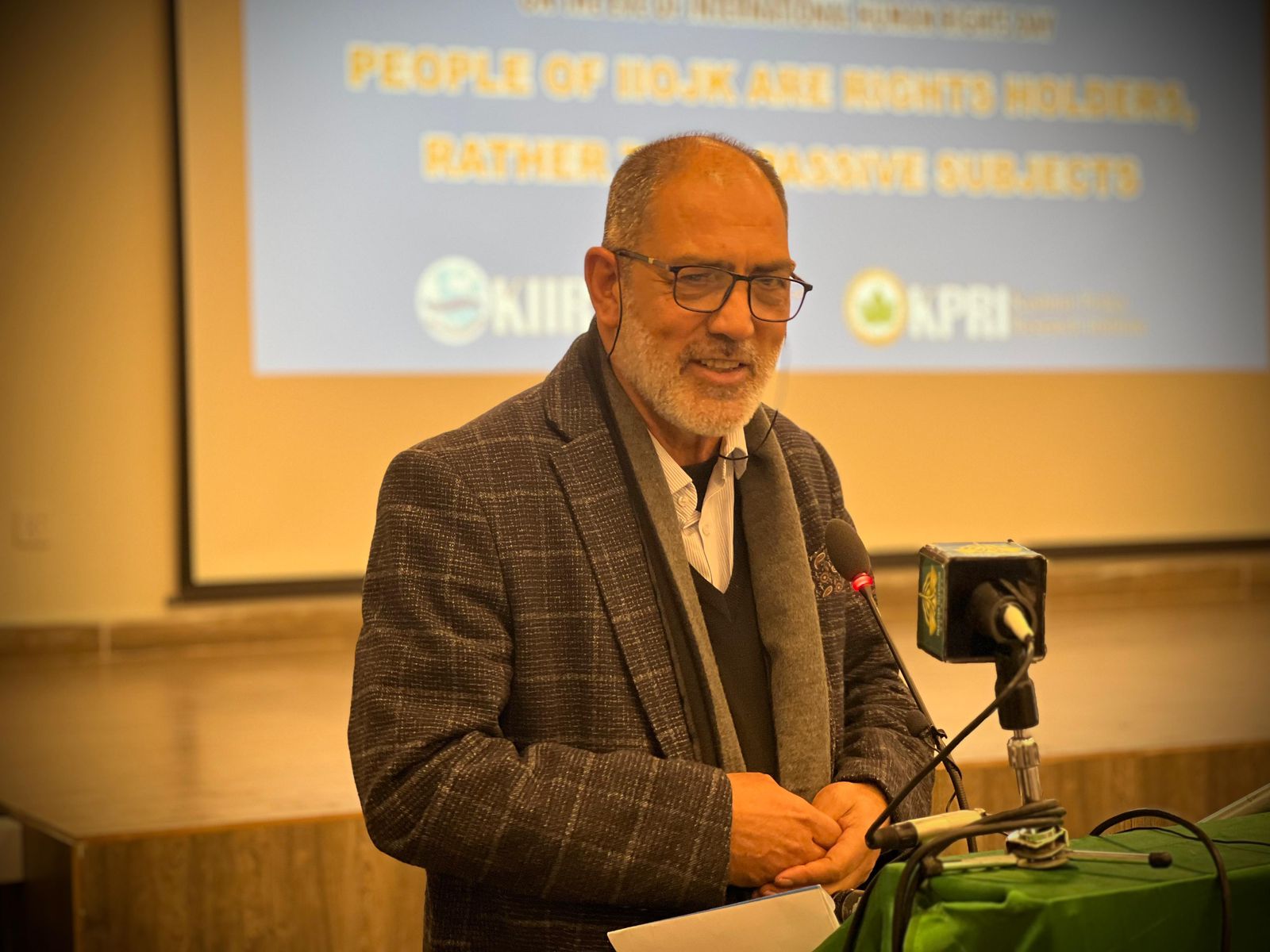
Altaf Hussain Wani
Aditya Dhar’s Dhurandhar arrives not merely as a film but as a cultural artifact crystallizing a troubling trend in contemporary Indian cinema—the weaponization of the medium to serve narrow nationalist agendas. Starring Ranveer Singh as a brooding RAW agent infiltrating Pakistan’s “deep state,” the film has sparked intense debate beyond its cinematic merits, reigniting discussions about Bollywood’s role in shaping hostile perceptions of Pakistan, its institutions, and the Kashmir dispute.
At its narrative core, Dhurandhar follows a predictable template: Indian agent Ajay Singh (Ranveer) goes rogue—or appears to—to dismantle a Pakistani conspiracy involving nuclear materials and Kashmiri freedom movement. The plot mechanics are less concerning than the film’s semiotic choices. Pakistan is rendered not as a complex nation but as a monolithic villainous entity—its military portrayed as uniformly duplicitous, its civilians as either helpless victims or radicalized extremists, and its territory a lawless frontier where Indian heroism alone restores moral order
Aditya Dhar’s other projects more or less are similar in nature, which, abandon subtlety for jingoistic spectacle.
The film’s most controversial sequence involves a fictional Pakistani nuclear scientist conspiring with “Kashmiri freedom fighters” in a plot that conflates Pakistan’s legitimate security concerns with nefarious designs on India. This narrative sleight-of-hand performs crucial ideological work: it erases decades of complex Kashmir history, reducing a contested territory and its people’s aspirations into a pawn in India-Pakistan hostilities. By depicting Kashmiri political sentiment as entirely externally manufactured by Pakistan, Dhurandhar participates in what scholars call “narrative colonialism”—denying agency to Kashmiris while using their homeland as a backdrop for nationalist mythmaking.
The Machinery of Media Manipulation
What distinguishes Dhurandhar from mere jingoistic entertainment is its sophisticated integration with India’s broader media ecosystem. The film’s release was preceded by a coordinated digital campaign across platforms like Twitter and Facebook, where bot accounts amplified hashtags like #DhurandharExposesPak and #IndiaStrikesBack. Several fact-checking organizations identified a network of inauthentic sites—masquerading as independent news portals—that published identical positive reviews and geopolitical analysis praising the film’s “timely expose of Pakistani duplicity.”
This phenomenon reflects a documented strategy: leveraging cinema to launder political narratives through entertainment. The line between state messaging and popular culture blurs when films echo official talking points verbatim. Dhurandhar’s dialogue includes lines like “Pakistan’s army is its real enemy,” mirroring statements made by Indian officials during recent border tensions. Such convergence suggests either remarkable coincidence or deliberate coordination—what media theorists term “manufactured consent” through cultural production.
The film’s portrayal of Pakistan’s Inter-Services Intelligence (ISI) as a cartoonishly evil organization engaged in every conceivable crime—from drug trafficking to nuclear terrorism—feeds into a discourse that dehumanizes an entire nation’s security establishment. This matters because perceptions shape policy. When Indian audiences consume a steady diet of media depicting Pakistan as an irredeemable rogue state, it creates political space for aggressive foreign policy measures while undermining constituencies for peace.
Kashmir as Cinematic Battleground
Dhurandhar’s treatment of Kashmir exemplifies how cinema can become complicit in state narratives. The film opens with a disclaimer that it’s “inspired by true events,” yet its depiction of Kashmir shows no Hurriyat leaders, no Indian military presence, no pellet gun victims—only Pakistani handlers and radicalized youth. This selective representation serves to internationalize what India frames as a domestic issue while simultaneously externalizing blame.
By contrast, Kashmiri filmmakers and journalists have long struggled to platform their own narratives. When local artists document military crackdowns or civil rights concerns, they face censorship, harassment, and accusations of sedition. The asymmetry is stark: while Dhurandhar receives prime theatrical release and tax incentives under India’s new film certification policies favoring “nationalistic” content, Kashmiri voices are systematically silenced. Cinema thus becomes not a mirror to society but a tool of epistemic violence, determining whose stories get told and whose get suppressed.
The Critical Backlash and Defense
The film has faced significant criticism, both domestically and internationally, Six gulf states Kingdom of Sudi Arbia, Oman, Kowet, Qatar, UAE and Bahrain have banned the screening of film .Pakistani authorities formally protested its “defamatory and inflammatory content,” while Indian civil society groups condemned its “warmongering.” Prominent Indian film critic Anupama Chopra called it “a dangerous simplification of complex geopolitics” while Chinmayi Sripaada in her review said, “bloodhounds and hyenas are better than the humans claiming to protect this country. May this country be cleansed of the vile bigots.”
Several Mumbai-based filmmakers in 2014 signed an open letter expressing concern about Bollywood’s “drift toward propaganda.” Defenders of Dhurandhar argue that Pakistan similarly produces anti-India content, and that Indian filmmakers have the right to patriotic expression. This form of “whataboutism” misses a crucial point: the power differential matters. India’s film industry is the world’s largest, with massive global reach and influence that Pakistan’s Lollywood cannot match. When Indian cinema engages in hostile stereotyping, it reinforces existing power asymmetries and reaches international audiences who may lack context to critically evaluate these portrayals.
Moreover, the “patriotism versus propaganda” distinction hinges on nuance. Films like Raazi or Bajrangi Bhaijaan managed to depict cross-border tensions while humanizing characters on both sides. Dhurandhar offers no such complexity—its Pakistani characters lack interiority, existing solely as foils for Indian heroism. This isn’t patriotism; it is performative nationalism designed to elicit cheap applause while avoiding difficult truths about both nations’ roles in regional instability.
The Larger Pattern
Dhurandhar is not an isolated case but part of a post-2014 surge in Indian films that serve explicit political functions. Movies like Uri: The Surgical Strike, The Kashmir Files, and now Dhurandhar share common DNA: they rewrite historical events through a majoritarian lens, demonize opponents, and receive either explicit or tacit state support through tax breaks, prime screening slots, and endorsement by political figures.
This trend coincides with India’s broader media landscape transformation, where critical journalism faces pressure while pro-government outlets flourish. Cinema has joined this echo chamber, creating a feedback loop where art reinforces state narratives, which in turn shapes public appetite for more simplistic storytelling.
Conclusion: The Stakes of Storytelling
The problem with Dhurandhar isn’t that it’s critical of Pakistan—legitimate criticism has its place—but that it abandons artistic integrity for ideological service. It reduces complex histories to morality tales, substitutes caricature for character, and uses Kashmir not as a place with real people but as a symbolic battlefield for nationalist fantasy.
Cinema possesses unique power to humanize, complicate, and bridge divides. When it instead becomes a tool for defamation and polarization, it betrays its artistic and social responsibilities. Dhurandhar may succeed at the box office, tapping into prevailing nationalist sentiment, but its legacy will be that of a film that chose propaganda over truth, hostility over understanding, and division over dialogue. In an era of manufactured media narratives, the real casualty isn’t just accurate representation of Pakistan or Kashmir—it’s the Indian audience’s capacity for critical thought and the possibility of peace through cultural exchange.
Writer is chairman Islamabad Based think tank, Kashmir Institute of International Relations and can be reached:- chairman@kiir.org.ok, saleeemwani@hotmail.com, X@sultan1913