

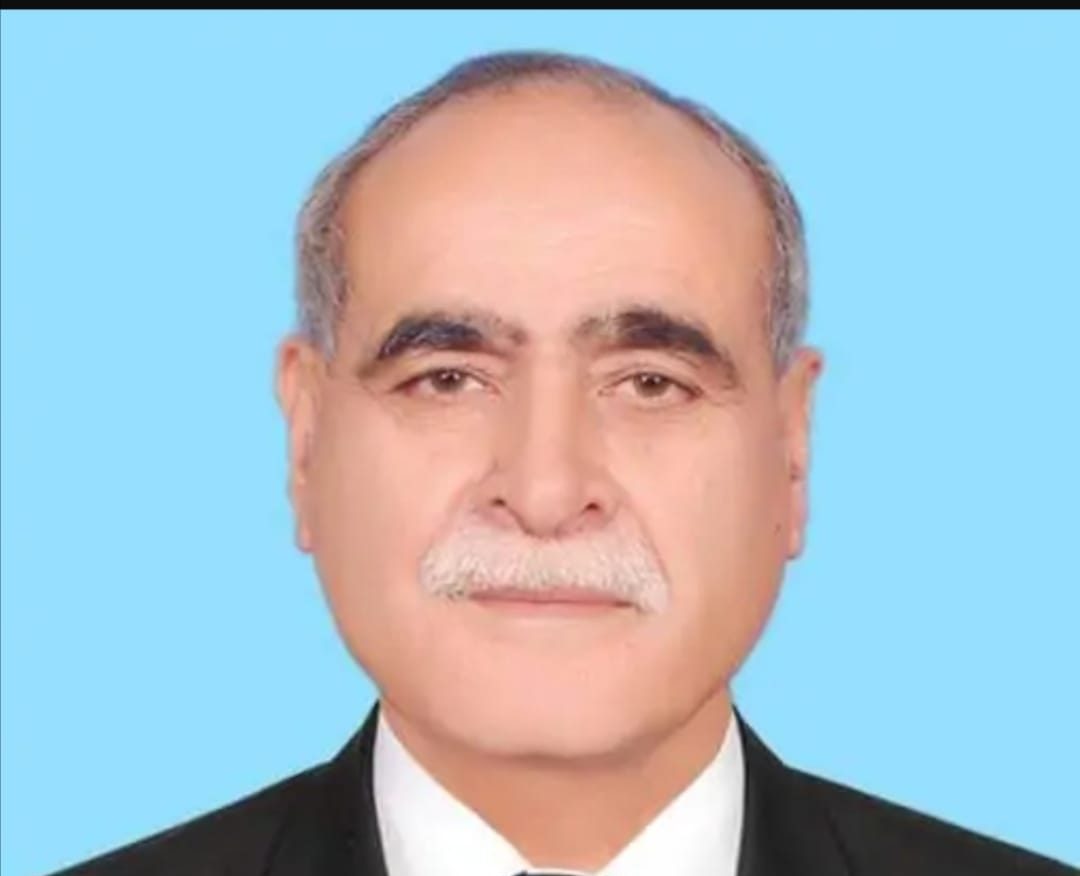
By Sardar Abdul Khaliq Wasi
Over the past fifty years, Pakistan’s political journey has been marked by turbulence and resilience. From the trauma of 1971 to constitutional evolution, political shocks, democratic setbacks, and national reconstruction, the country has seen leaders rise and fall. Among them, few have left as enduring a mark as Muhammad Nawaz Sharif.
His rise was never merely a pursuit of power; it was a long-term effort to shape the state around economic strength, infrastructural modernization, and civilian authority. In the 1990s, his developmental philosophy drove landmark projects—motorways, industrial expansion, deregulation, and investment incentives—reflecting a vision that Pakistan could no longer drift on routine politics. Under his leadership in 1998, Pakistan crossed a defining strategic threshold: nuclear tests made the country the world’s seventh nuclear state, reshaping South Asia’s strategic balance. Later, his initiation of the China–Pakistan Economic Corridor (CPEC) further cemented Pakistan’s long-term economic and geostrategic potential, linking energy projects, industrial zones, and regional connectivity in a transformative corridor.
Despite three dismissals, exile, and relentless political targeting, Nawaz Sharif never abandoned the belief that civilian continuity, institutional balance, and economic stability are essential to Pakistan’s survival. His moderate, institutionally respectful approach repeatedly regained relevance whenever the nation drifted toward polarization or administrative paralysis.
By 2024, Pakistan faced institutional fatigue, political hostility, and economic fragility. The state required cohesive leadership capable of aligning policy, governance, security, and diplomacy. In this climate, Nawaz Sharif’s vision reemerged as a guiding force behind a coordinated leadership matrix. This alignment combined Shahbaz Sharif’s administrative discipline, Maryam Nawaz’s dynamic reforms in Punjab, Ishaq Dar’s economic diplomacy, and Field Marshal Syed Asim Munir’s decisive strategic leadership.
Shehbaz Sharif restored performance-driven governance at the federal level, bringing order to energy, law enforcement, regulation, and administration. Maryam Nawaz reshaped provincial politics with a socially responsive agenda, emphasizing infrastructure, welfare, women’s empowerment, education reform, and youth engagement—bringing governance closer to people’s aspirations. Ishaq Dar strengthened Pakistan’s global posture, navigating complex negotiations with financial institutions and ensuring the country’s voice was heard on international platforms.
Security saw perhaps the most decisive transformation. Under Field Marshal Asim Munir, Pakistan strengthened internal security, fortified borders, and clarified its counterterrorism doctrine. The Bunian al-Marsous operation against India demonstrated operational readiness and deterrence, while the Ma’arij al-Harb (معرکۂ حق) framework enhanced intelligence, border, and domestic coordination, signaling a new era of national preparedness.
The 2024–2025 political equilibrium highlights that Nawaz Sharif remains central to Pakistan’s policy direction. His guiding principles—economic revival as the foundation of national security, democratic continuity through institutional harmony, and national strength through reconciliation—remain pillars of governance. These principles have allowed him to exert influence even behind the scenes, steering the state toward stability while nurturing a resilient strategic posture.
As Pakistan moves through 2025, the coordinated leadership model demonstrates that governance succeeds when economic planning, administrative discipline, security readiness, and diplomatic foresight converge. Nawaz Sharif’s vision, Shahbaz Sharif’s management, Maryam Nawaz’s reforms, Ishaq Dar’s economic strategy, and Field Marshal Asim Munir’s security oversight collectively foster a state capable of internal stability and international credibility.
At the center of this alignment stands Nawaz Sharif—experienced, resilient, and still capable of offering a steady compass. Half a century into public life, he remains a reference point for strategic foresight, institutional respect, and long-term national planning. Pakistan in 2025 proves a simple but profound truth: leadership guided by vision and coherence can steer a nation from turbulence toward stability, securing domestic strength and global recognition. Nawaz Sharif embodies this principle, a constant in a landscape often defined by unpredictability, and a testament to the enduring impact of thoughtful, strategic leadership.