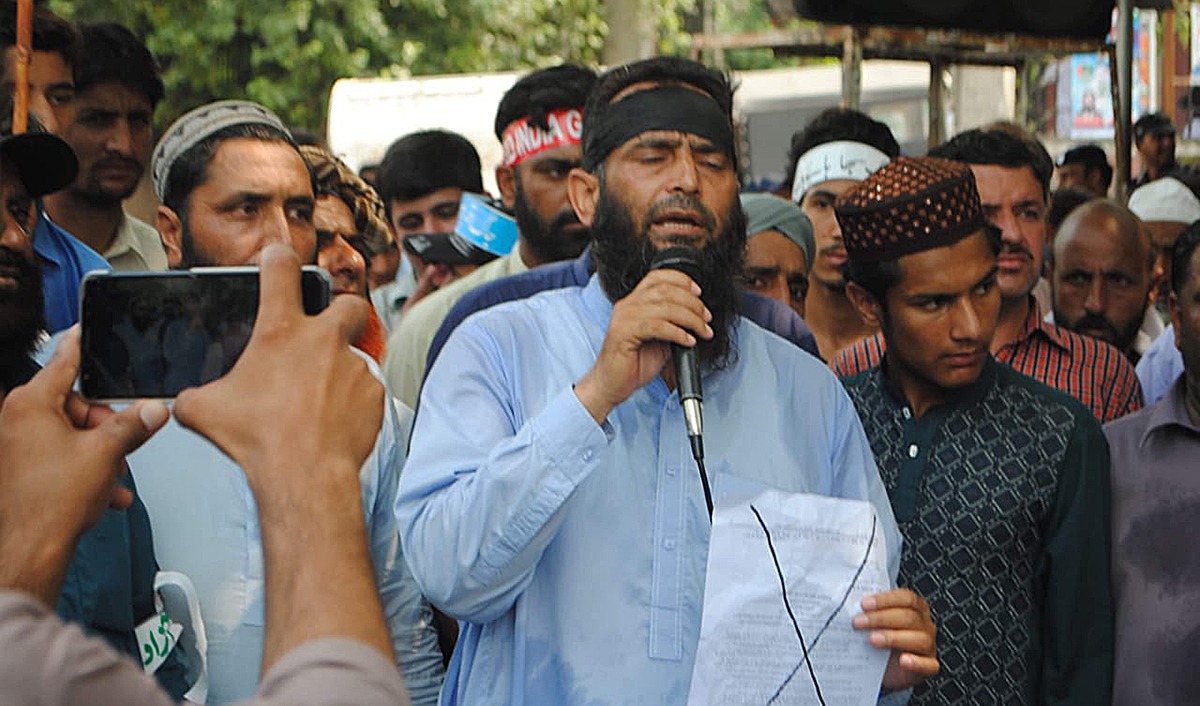
Muzaffarabad: Chairman of Pasban-e-Hurriyat Jammu and Kashmir, Uzair Ahmad Ghazali, has strongly condemned the sentences handed down by an Indian court to Kashmiri women leaders Asiya Andrabi, Naheeda Nasreen, and Sofi Fahmeeda, describing the move as a grave example of oppression, injustice, and political retaliation.
In his statement issued on Tuesday Ghazali denounced the court’s decision to sentence Syeda Asiya Andrabi to two life terms, while Naheeda Nasreen and Sofi Fahmeeda were each awarded 30-year prison terms. He characterized the verdict as “open terrorism against humanity” and an extreme form of vengeance against peaceful political dissent.
Reacting strongly to the ruling, Ghazali stated that the decision once again exposes the lack of impartiality in the judicial system in Indian-administered Jammu and Kashmir. He asserted that the courts have become instruments of state repression rather than upholders of justice.
He emphasized that the punishment of unarmed and peaceful Kashmiri women leaders for their political beliefs represents a systematic attempt to silence the voice of the Kashmiri people. According to Ghazali, these leaders have consistently advocated for their internationally recognized right to self-determination, yet have been penalized for speaking out.
Highlighting the case of Sofi Fahmeeda, who has reportedly been imprisoned for seven years, Ghazali raised serious concerns over the impact on her education and life. He described the continued detention and additional sentencing of a young student as a troubling reflection on the global conscience.
Ghazali further stated that such decisions constitute serious violations of human rights, as well as a breach of international law and fundamental principles of justice. He added that the actions demonstrate a policy of suppressing dissent through force rather than engaging with it.
He urged the international community, particularly the United Nations and global human rights organizations, to take immediate notice of the situation. Ghazali called for effective measures to secure the release of Kashmiri political prisoners and to hold India accountable for upholding human rights obligations.
He asserted that such actions would not weaken the resolve of the Kashmiri people. He reaffirmed their commitment to continue their struggle for freedom, self-determination, and justice, expressing confidence that these goals will ultimately prevail.