

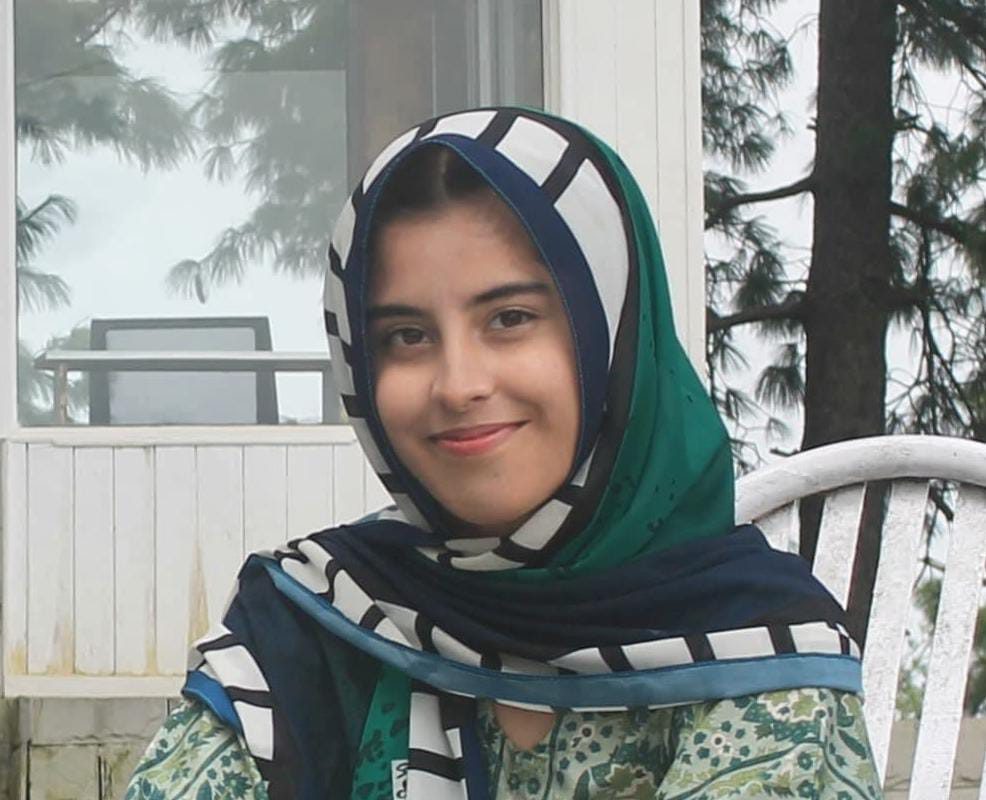
By Samra Khaksar
For decades, Indian occupied Jammu and Kashmir has been viewed through the lens of conflict and geopolitics. Yet beneath the visible militarization lies a quieter but far more enduring struggle, the systematic erosion of identity. Since the abrogation of Articles 370 and 35A in August 2019, the region has undergone a transformation that extends well beyond administrative change. What was once a constitutional acknowledgment of Kashmir’s distinct political and cultural status has been replaced by a project of enforced uniformity. New domicile laws have opened the door to demographic restructuring, altering the social fabric of a territory internationally recognized as disputed. In such a context, population change is not a neutral policy choice; it becomes a tool of political engineering. For Kashmiris, this is not merely about land or jobs, it is about the slow dilution of collective identity and the steady erosion of political agency.
On this Human Rights Day, the Kashmiri experience demands urgent global attention. The right to identity, culture, and self-determination are not privileges granted by states; they are universal human rights. When identity itself is placed under siege, silence becomes complicity.
In the years following the constitutional amendments, land emerged as a principal arena of contestation. Areas that were earlier protected under state subject laws were opened to acquisition by non-residents. Forest land, village commons, agricultural fields, and even religious sites have become susceptible to state appropriation. Marketed under the banner of development, these changes are perceived by many as displacement rather than advancement. The opening of land for military expansion, industrial zones, and new settlements has altered both the physical and cultural landscape leaving communities anxious about the future ownership of ancestral spaces. Land is not just territory; it embodies memory, continuity, and belonging. Its loss subtly erodes the social geography that anchors individual and collective identity.
Cultural erosion has also advanced along less visible but equally significant channels. At the center of this lies an issue of language, which has long been a marker of identity in IIoJK. The Jammu and Kashmir Official Languages Act introduced Hindi into official usage, changing the linguistic hierarchy of the region that was historically grounded in Urdu and Kashmiri. While multilingualism is not inherently damaging, the symbolic promotion of one language represents a political aim: to bring the region culturally closer to mainland India and further from its historical and cultural associations. This shift in linguistic policy, combined with changes in educational narratives, seeks to recalibrate how future generations understand their past and imagine their position in the world.
Similarly, heritage sites and cultural institutions have felt the pull of redevelopment and administrative incursion. Shrines, historical buildings, and public spaces are being put to alternative uses, with the cultural tapestry woven through centuries of art, architecture, poetry, and spiritual faith-threatening to be relegated to the background as an official narrative prioritizing assimilation over preservation takes center stage. The discourse on Kashmir also changed; development and normalcy were brought to the front as a replacement to the political demands of the region, reframing decades-long struggles as misunderstandings or misguidance rather than expressions of identity and rights.
This has caused a deep psychological impact, especially among the youth in Kashmir. A generation reared under militarisation now faces a different kind of uncertainty: the risk of eroding their identity within their home. Digital surveillance, restrictions on expression, and criminalisation of political dissent have confined any ability to articulate grievances or engage in cultural expression without fear. Young Kashmiris describe a sense of alienation that extends beyond politics—a perception of gradually becoming strangers in their historical space. If the narratives, institutions, and public discourse are controlled, identity fragments, and the inner architecture of belonging weakens.
Demographic changes have legal and political consequences. International law views demographic engineering in disputed territories as a potential violation of collective rights. Changes in population composition can alter electoral outcomes, representation, and political bargaining power. In Kashmir, the administrative restructuring, constituency redistricting, and issuance of domicile certificates collectively indicate a long-term endeavor to reshape the region’s political demography. Whereas it was framed in terms of reforms, these actions raise serious questions about whether they serve or involve demographic transformation. The global response to these changes remains minimal despite their magnitude and impact. International players are bound by geopolitical interests, strategic partnerships, and economic imperatives that inhibit them from boldly articulating this issue.
There is more to the global silence on Kashmir than diplomatic restraint. When cultural erasure is normalized, it becomes irreversible. When a people lose their language, land, and collective memory, they lose more than heritage, they lose their political future. The struggle in Kashmir today goes beyond representation or autonomy; it is a fight for the survival of identity itself. Cultural existence is as vital as political rights, and when both come under attack, the crisis becomes existential. Kashmiris are resisting not only dispossession of land but the attempted disappearance of who they are. As Human Rights Day approaches, the world must recognize that Kashmir is not merely a territorial dispute, it is a battleground over identity. The deepest wounds are not always inflicted on the battlefield; they are carved in silence. In Kashmir, the erosion of identity is not accidental, it is deliberate, and acknowledging this truth is the first step toward justice.
The writer is a student of Strategic Studies at National Defence University and a research Intern at Kashmir Institute of International relations. She is also an active member of HEAL Pakistan , a youth led non governmental organization.