
The Pahalgam Pretext: India’s Reckless Escalation and Pakistan’s Emergence as a Regional Stabilizer

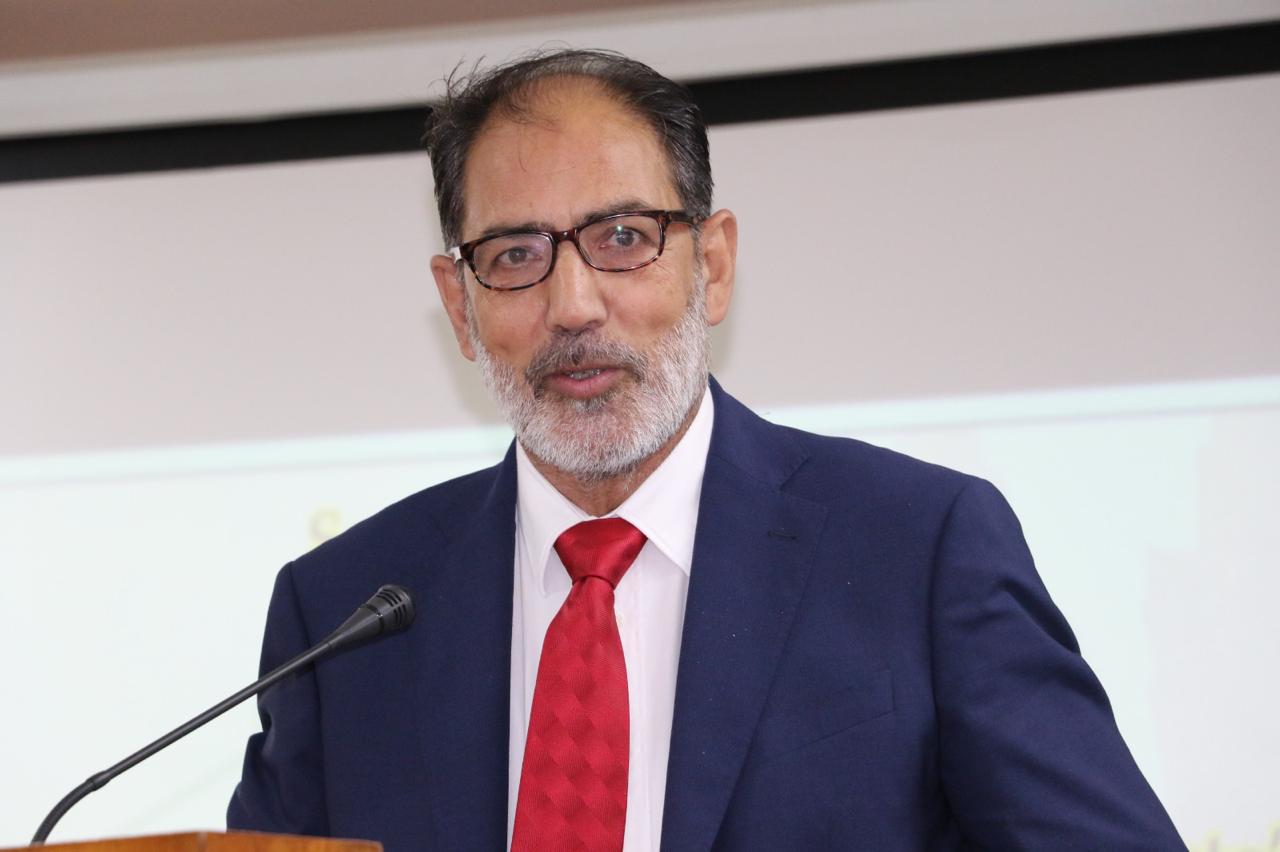
Altaf Hussain Wani
The Pahalgam attack, which killed 26 people, marks a critical escalation point in South Asian tensions. India’s immediate attribution to Pakistan, without presenting verifiable evidence, has drawn scrutiny from regional analysts questioning inconsistencies in the narrative. Rather than restraint, New Delhi’s response adopted a confrontational posture, intensifying regional instability and raising serious concerns about escalation risks in a nuclearized environment.
India’s response was not only disproportionate but also ruthlessly punitive, deepening the suffering of an already besieged population in Jammu and Kashmir. Under the pretext of “intensified military operations,” Indian occupation forces unleashed widespread violence that has resulted in at least 74 killings, 160 individuals tortured or injured, and the arbitrary arrest of 4,705 civilians. With 2,850 siege and search operations carried out, entire communities have been subjected to systematic intimidation and coercion. Homes have not been spared either, 43 incidents of arson and 193 cases of property attachment reflect a deliberate strategy of collective punishment, leaving 8 women widowed and 11 children orphaned in its wake.
Rather than pursuing justice, New Delhi has exploited the Pahalgam tragedy to manufacture war hysteria and legitimize its escalatory actions. In a particularly egregious move, authorities have deported scores of women from Indian illegally occupied Jammu and Kashmir, forcibly separating them from their children, an act that not only violates basic humanitarian norms but also entrenches a cycle of trauma and dispossession.
Pakistan’s response remained grounded in international norms: it demanded credible, verifiable evidence linking the attack to its territory and offered to cooperate in an independent international investigation, an offer India flatly rejected. Instead of substantiating its claims, New Delhi escalated tensions through inflammatory rhetoric, which soon translated into outright aggression. Under “Operation Sindoor,” Indian forces launched missile strikes into Pakistani territory, killing at least 31 civilians and injuring 57 others, including women and children across multiple locations in Pakistan and Azad Jammu and Kashmir (AJK). This was not restraint it was a calculated escalation targeting civilian spaces.
Even more alarming was India’s unilateral move to place the Indus Waters Treaty (IWT) in abeyance, a reckless step that strikes at the heart of regional stability. Signed in 1960 and brokered by the World Bank, the treaty allocates the three western rivers, Indus, Jhelum, and Chenab, to Pakistan, which accounts for nearly 80% of the total water flow critical to its agriculture. By attempting to weaponize water, India is not merely violating a bilateral agreement; it is endangering the livelihood of over 220 million people who depend on this system. Pakistan’s response has been unequivocal: any attempt to block or divert its legally guaranteed water share will be treated as an act of war, and the state will take all necessary measures to safeguard its rights.
Faced with Indian aggression, Pakistan responded with calibrated precision and strategic restraint. “Operation Bunyan-um-Marsoos” showcased advanced defensive capabilities, successfully neutralizing incoming threats while maintaining full-spectrum readiness along the Line of Control spanning over 700 kilometers. Crucially, Pakistan avoided horizontal escalation, reinforcing a doctrine of controlled deterrence rather than reckless retaliation. The crisis ultimately resulted in a US-mediated ceasefire. In stark contrast, India denied any external involvement to manage domestic optics, while Pakistan openly acknowledged the role of Donald Trump, who praised Shehbaz Sharif and Syed Asim Munir for their restraint and statesmanship. The intervention compelled India to step back, reinforcing Pakistan’s image as a disciplined and capable military power.
More importantly, Pakistan translated this military credibility into diplomatic leverage. It assumed a proactive role in easing regional tensions and emerged as a key intermediary between the United States and Iran. The first round of direct talks, held on April 10–11, 2026, after a 47-year hiatus, marked a significant breakthrough. With global energy prices surging by nearly 15% amid regional instability, Pakistan’s mediation efforts have gained heightened relevance. Islamabad is now working to organize the second round of talks within the next 72 to 96 hours, while hosting a steady influx of international delegations, positioning itself as a pivotal stabilizing force in an increasingly volatile international system.
Conversely, India continues to play the role of a regional spoiler. Unwilling to accept Pakistan’s diplomatic ascendancy, New Delhi has intensified its hybrid warfare against Pakistan. Evidence continues to mount regarding India’s covert support for terrorist groups and its manipulation of the Afghan regime to foment instability inside Pakistan. Furthermore, India’s strategic alignment with Israel not only undermines the Palestinian cause but also positions New Delhi as a disruptive force in the Middle East, actively sabotaging peace initiatives to maintain a hegemonic stranglehold over the region.
The Pahalgam fallout exposes a stark divide: Pakistan has pursued deterrence, restraint, and diplomacy, while India persists with majoritarian nationalism, coercion in Jammu and Kashmir, and destabilizing brinkmanship. This is no longer a bilateral issue, it is a test of global resolve. Continued silence enables escalation. The international community must hold India accountable and push for immediate, meaningful dialogue. Pakistan’s commitment to stability deserves recognition and support. A durable peace requires compelling India to the negotiating table and fulfilling long-overdue commitments to the people of Jammu and Kashmir, including their right to determine their political future.
The writer is the Chairman of Kashmir Institute of International Relations (KIIR) and can be reached @ email saleeemwani@hotmail.com and on X @sultan1913