

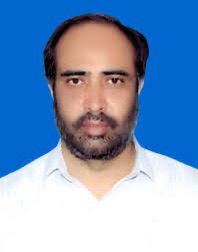
Nissar Ahmed Thakur
Indian occupation authorities have recently banned South Kashmir’s premier educational institute, Darul Uloom Jamia Siraj-ul-Uloom, under the Unlawful Activities (Prevention) Act (UAPA), 1967—a law that has widely been criticised for being used to criminalise political activity, religious practices, and even institutions that have long served underprivileged and marginalized communities.
This move, with far-reaching consequences, raises serious concerns about the authorities’ apparent disregard for a population already struggling to preserve its identity under an increasingly centralised political framework shaped by an RSS-influenced regime that pursues an exclusionary, majoritarian agenda leaving little space for minorities.
It is important to recall that Jamia Siraj-ul-Uloom has been among the Valley’s well-established institutions, shaping the futures of thousands and producing doctors, scholars, and professionals whose contributions to society extend beyond the borders of the J&K state. As an affiliate of the Jammu and Kashmir Board of School Education, the seminary—where Hifz, Fiqh, and Arabic are taught alongside a strong focus on modern education—has operated within a recognised framework since its establishment in the late 1990s. Its abrupt closure, without a clear and transparent process, has forced thousands of students from economically weaker backgrounds to abandon their studies midway, putting their academic futures in immediate jeopardy.
This action is not an isolated development. In recent years, Kashmir has witnessed the closure or takeover of trusts, shrines, and mosques, alongside increasing state intervention in institutions serving economically underprivileged and marginalized communities.
Earlier actions involving the banning of schools and colleges run by the Falah-e-Aam Trust (FAT) point to a growing pattern under which educational institutions have been arbitrarily shut down on one pretext or another. The FAT, which oversaw a large network of educational institutions across Kashmir, was declared an “unlawful association” under the UAPA in 2022, on allegations of links with Jamaat-e-Islami.
As of April 2026, a total of 273 institutions linked to the trust have reportedly come under government control, including 215 in 2025 and a further 58 this year. While these are official figures, some observers argue that the actual scale could be higher due to concerns over the reporting and classification of institutions. In any case, the numbers indicate a sustained pattern that is difficult to overlook.
Over the years, the Kashmir region is increasingly being reshaped into a system resembling serfdom, where externally appointed authorities—acting in a manner reminiscent of colonial viceroys—exert influence not only over governance but also over the intellectual and cultural direction of society. Decisions about what Kashmiri students should learn, which institutions they should attend, which curriculum they should follow, and what language they should speak are increasingly being dictated by administrators from outside the region rather than by those elected by its own people.
This is a classic textbook example of colonial education, which seeks to regulate, assimilate, and ultimately control the indigenous population through the imposition of a foreign curriculum, language, and cultural framework. As far as the colonisation of education in Kashmir is concerned, its roots could be traced back to the 1980s, when the NCERT-based system was introduced, under which the status of Islamiyat (Islamic Studies) within the national curriculum began to change.
The move significantly contributed to the restructuring of the education system in the region. Under the JKBOSE framework, Islamic Studies held a more prominent position in many institutions across the Valley, often as a compulsory or semi-compulsory subject. However, with the adoption of the NCERT-based system, Islamiyat was reduced to an optional or elective subject rather than a mandatory component of the curriculum.
This transition is viewed by many observers as part of a broader reorientation of the education system aimed at reducing the role of Islamic identity in Kashmiri society. Against this backdrop, FAT-run schools and seminaries such as Siraj-ul-Uloom have played a crucial role in safeguarding the region’s Muslim identity.
The closure of such institutions is no longer an administrative matter. The issue is that the BJP government increasingly views developments in Kashmir through a security lens, treating anything associated with Muslims—whether institutions, history, or language—as a problem.
While International law recognises the right to religious education within broader protections of freedom of religion and the right to education, the Indian authorities’ selective targeting of educational institutions amounts to a brazen infringement of Kashmiris’ religious rights and an egregious assault on their right to education.
The Covenant on ESCR protects the freedom to manifest religion in teaching and practice and affirm parents’ rights to ensure religious and moral education for their children. Similarly, the Convention on the Rights of the Child upholds respect for a child’s religious identity and cultural values in education. Even instruments such as the UDHR and related covenants affirm the right of communities to educate their children in accordance with their beliefs.
So the problem does not lie in the institutions, but in a system that views Kashmiris with suspicion and portrays their distinct political, cultural, and religious identity as a threat to the Indian state.
Tail piece: The use of a counter-terror framework to justify actions against educational facilities risks blurring the line between security concerns and the fundamental right to education. India must ensure that educational institutions in Kashmir are not criminalised under sweeping security laws, and that legitimate spaces of learning are not treated as extensions of security threats. Safeguarding education requires restraint, transparency, and adherence to constitutional and international commitments, rather than their erosion through broad and indiscriminate application of UAPA provisions.
Writer is Director media communications at Kashmir Institute of International Relations (KIIR) and can be reached:- nissarthakur@gmail.com